
Depth Fog
Post Processing
WebGPU
Why Browser-Based 3D Looks Flat and How WebGPU Post-Processing Fixes It
June 15, 2026 · By Unreal Twin
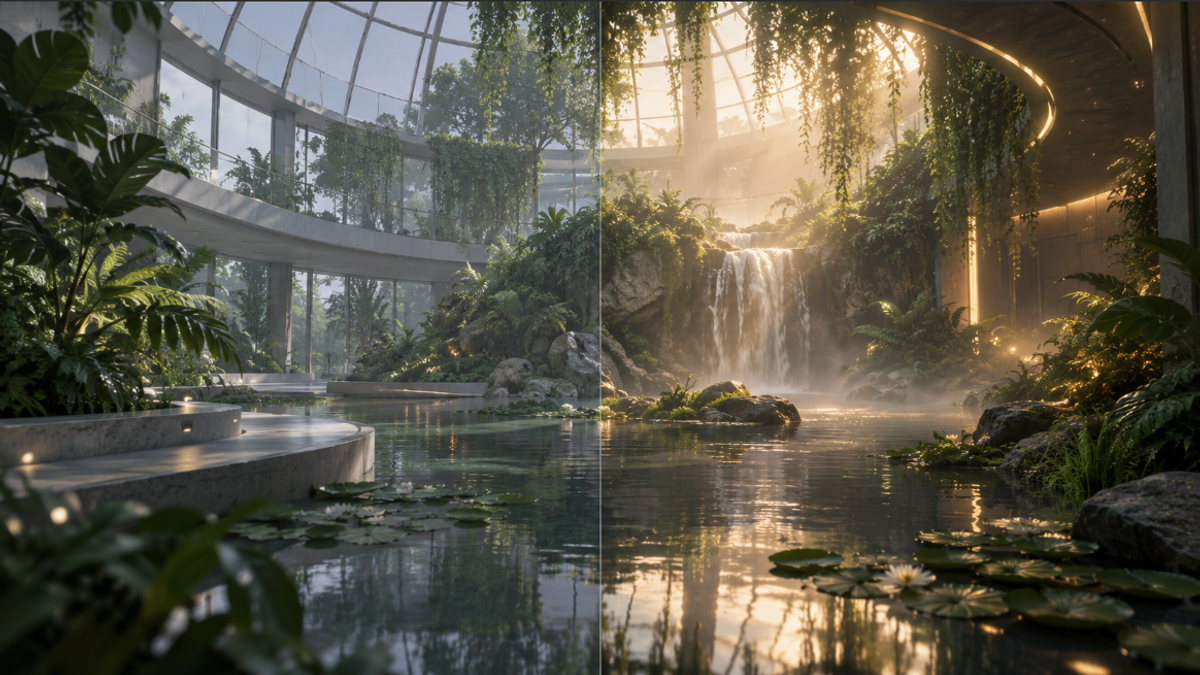
Many browser-based 3D experiences are technically correct and visually forgettable. The geometry is present, the camera moves, and the textures load, but the scene feels flat. The missing ingredient is often not more detail. It is the final layer of art direction.
Unreal artists rarely judge a scene from raw material output. They use fog to establish depth, bloom to shape bright areas, grading to control emotion, and sharpening to protect fine structure. Those choices are not cosmetic extras. They are part of why the environment reads at the intended scale and mood.
Depth is the difference between a model and an atmosphere
Depth fog was the most important addition to UnrealTwin’s WebGPU post-processing stack. A simple screen tint can make an image hazy, but it cannot understand where surfaces sit in space. Depth-aware fog uses the scene’s depth information to build separation, allowing distant areas to recede while nearby forms remain grounded.
That changes the emotional weight of an environment. A corridor becomes longer. A greenhouse gains humid volume. A workshop feels dense with air rather than filled with isolated props. The viewer begins to read atmosphere as part of the architecture.
Bloom adds controlled light bleed, color grading adjusts the final tonal language, and sharpening helps preserve micro-detail across dense Gaussian data. Because the stack runs locally through WebGPU, those decisions can be applied without sending each frame to a remote server.
“
Raw density can impress the eye. Post-processing tells the eye what the scene is supposed to feel like.
”
The stack has to remain usable on real devices
Desktop demos make it easy to add effects without discipline. A product has to survive laptops and mobile devices with different memory, thermal, and bandwidth limits. The solution is not to force one quality level everywhere. Effects need to be designed as a stack, profiled individually, and adapted through device-specific presets.
That is why the post-process milestone matters beyond its visual before-and-after. It proves that cinematic treatment can become part of the browser runtime rather than a video exported from the original scene. The experience remains interactive, and the look can be adjusted after the base splat has been created.
Art direction should survive distribution
Scenes such as Carpenter’s Workshop, Art Gallery, and Zorah Greenhouse are built around mood as much as content. A neutral viewer would preserve the objects and lose part of the work. UnrealTwin’s post-processing layer exists to carry that final judgment into the web version.
The goal is not to make every scene more dramatic. It is to give the artist enough control that the browser version still feels authored.
WebGPU changes what is practical, but technology alone does not create atmosphere. The important step is using that access with the same visual discipline artists already bring to Unreal Engine. The web should not be where art direction goes to disappear.